How Did the U.S. Energy Storage Market Perform in Q1 2026?
According to the Energy Storage Market Outlook Q2 2026 released by the Solar Energy Industries Association (SEIA) on May 20, the U.S. energy storage market reached a new record high for first-quarter installations in Q1 2026.
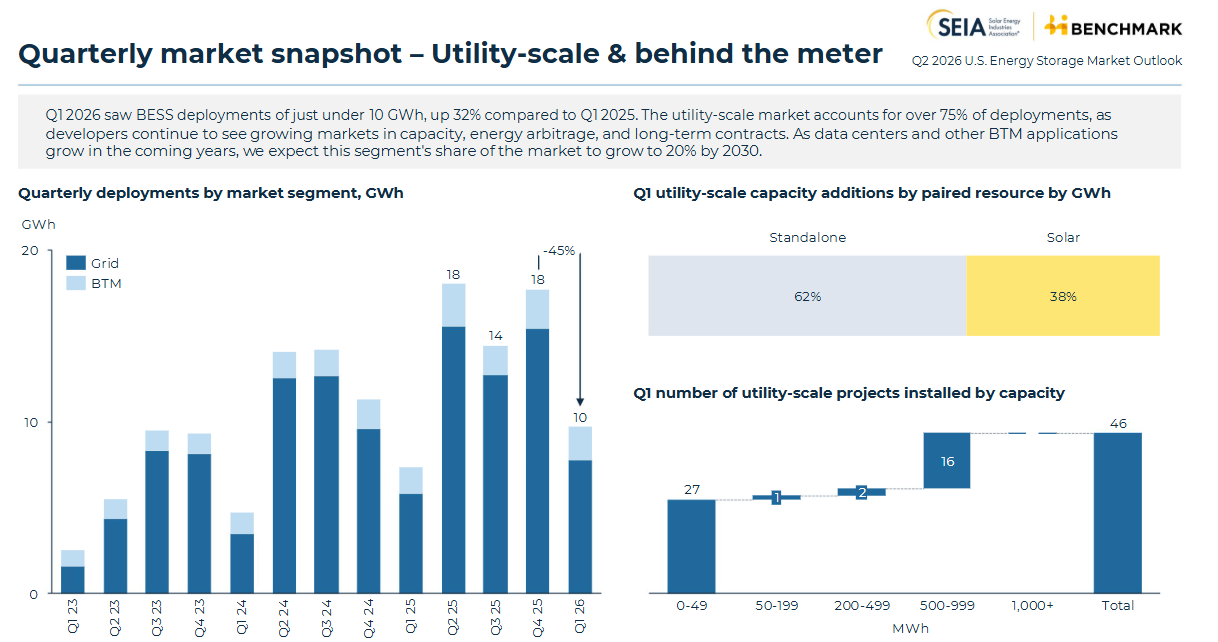
Data shows that newly deployed battery energy storage systems (BESS) in the U.S. reached nearly 10 GWh / 6.77 GW in Q1, representing a 32% year-over-year increase, although deployments declined 45% quarter-over-quarter.
However, a closer look at the market reveals a clear divergence among different segments.
While the utility-scale storage market continued its rapid growth, residential and commercial & industrial (C&I) storage followed very different trajectories.
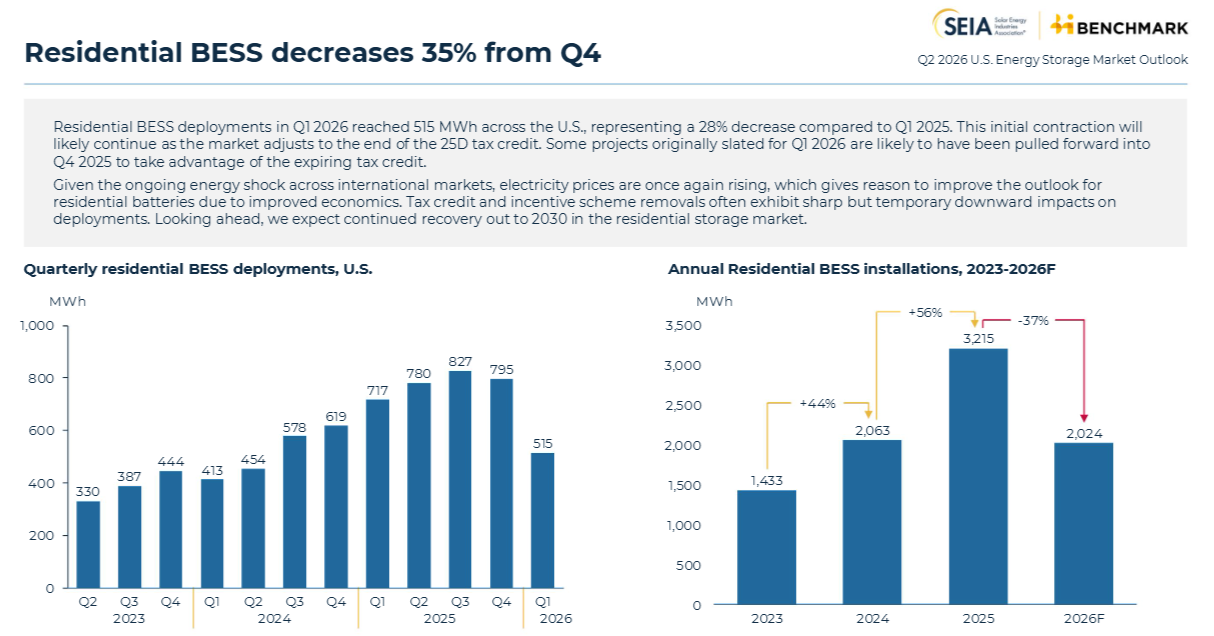
Residential storage installations declined 28% year-over-year and 35% quarter-over-quarter. In my view, the primary reason was the pull-forward of demand driven by expectations of an earlier expiration of federal incentives. Some installations that would have occurred in 2026 were completed in 2025 instead, resulting in slower growth during the first quarter of this year.
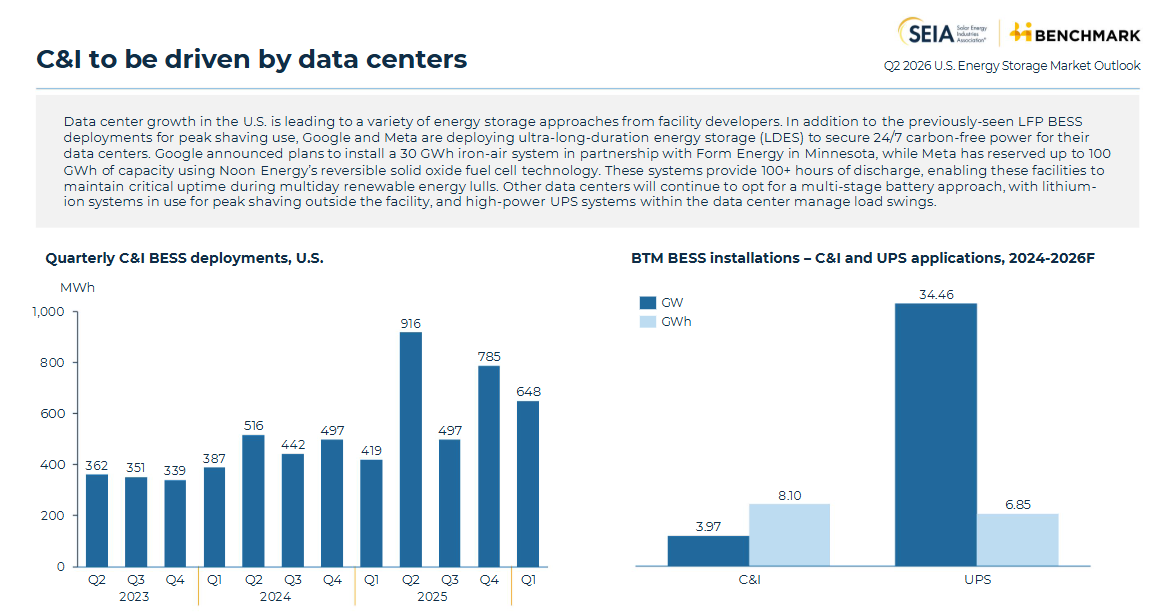
The C&I storage segment delivered a relatively strong performance, with installations increasing 54% year-over-year. Although deployments declined 17% quarter-over-quarter, the segment continues to demonstrate solid growth momentum. Rising electricity demand from data centers is becoming an increasingly important driver of C&I storage adoption.
That said, the 45% quarter-over-quarter decline does not necessarily indicate a cooling market.
Energy storage project development and grid interconnection are highly seasonal by nature. Historically, first-quarter deployment volumes in the U.S. have been lower than those recorded in the fourth quarter. Therefore, a Q1 decline compared with Q4 is normal. Conversely, if Q1 deployments were to increase quarter-over-quarter, it would typically signal an exceptionally strong market.
Looking ahead, we believe three key factors will shape the future growth of the U.S. energy storage market:
✅ Residential Storage: Demand Fluctuations Driven by Policy Changes
Expectations of an earlier expiration of federal incentives encouraged some customers to move forward with installations ahead of schedule, pulling demand from 2026 into 2025. As a result, the residential storage market may experience a temporary adjustment period in 2026, similar to a "destocking" cycle, which could weigh on short-term growth.
However, the long-term fundamentals of the residential storage market remain intact. Rising electricity prices, increasing demand for grid resilience, and consumers' pursuit of greater energy independence will continue to support long-term growth.
✅ C&I Storage: Data Centers Are Emerging as a Major Source of New Demand
As the AI industry continues to expand, data center electricity consumption is growing rapidly. At the same time, businesses are placing greater emphasis on peak shaving, backup power, and energy cost optimization, creating additional opportunities for energy storage deployment.
✅ Utility-Scale Storage: Policy Remains the Most Important Growth Driver
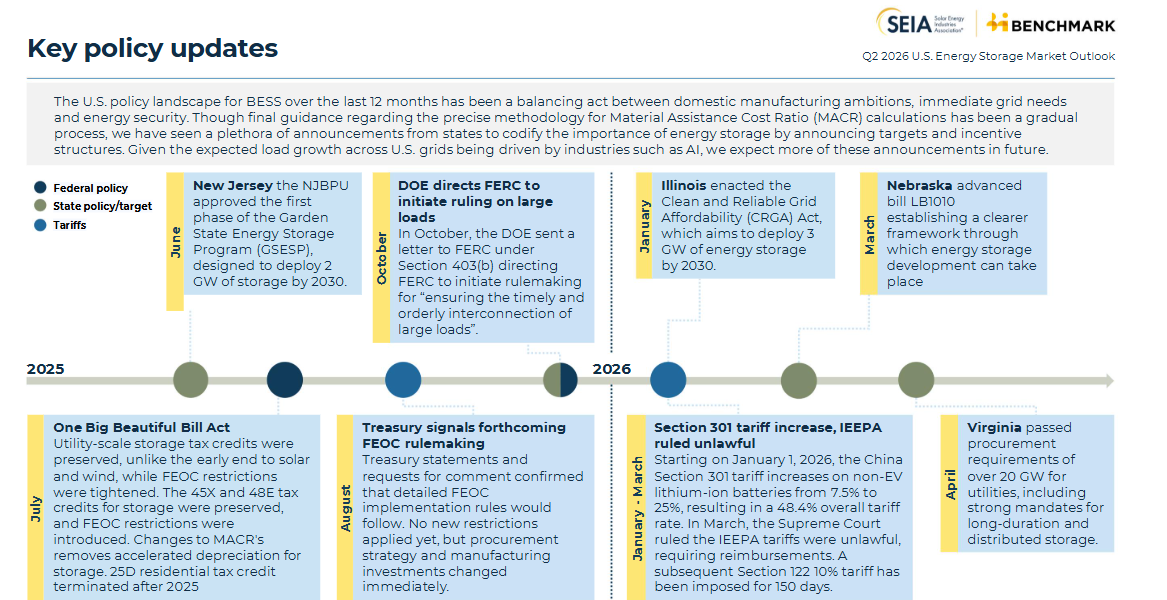
The passage of the One Big Beautiful Bill (OBBB) in July 2025 preserved the Investment Tax Credit (ITC) for energy storage projects. While the storage ITC applies across multiple market segments, utility-scale projects are expected to benefit the most. This policy support provides greater certainty for developers and investors and strengthens the outlook for large-scale storage deployment over the coming years.
Based on the Q1 data, the fundamental growth story of the U.S. energy storage market remains unchanged. What is changing is the pace and dynamics of growth across different segments.
If the industry's focus over the past few years has been on how much storage is being installed, the next phase may be defined by which applications are driving that growth.
From today's perspective, policy support, data center expansion, and the broader transformation of the power system are likely to remain the three most important forces shaping the future of the U.S. energy storage market.